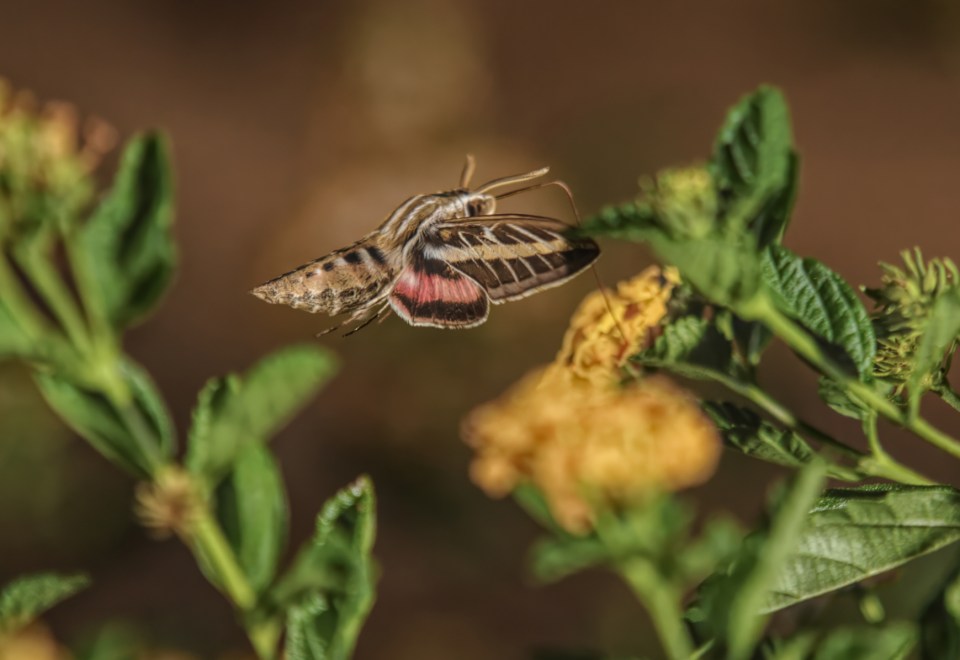
Take no part in the unfruitful works of darkness, but instead expose them.
(Eph. 5:11)
Truly, I do not take scripture lightly. In this case, the application to photography was too tack sharp.
Photographers are obsessed. For whatever level, whatever reason, people who make photos are just driven by that little voice in our head that says “wow, check that out.” That little cue is the story-telling engine of being human.
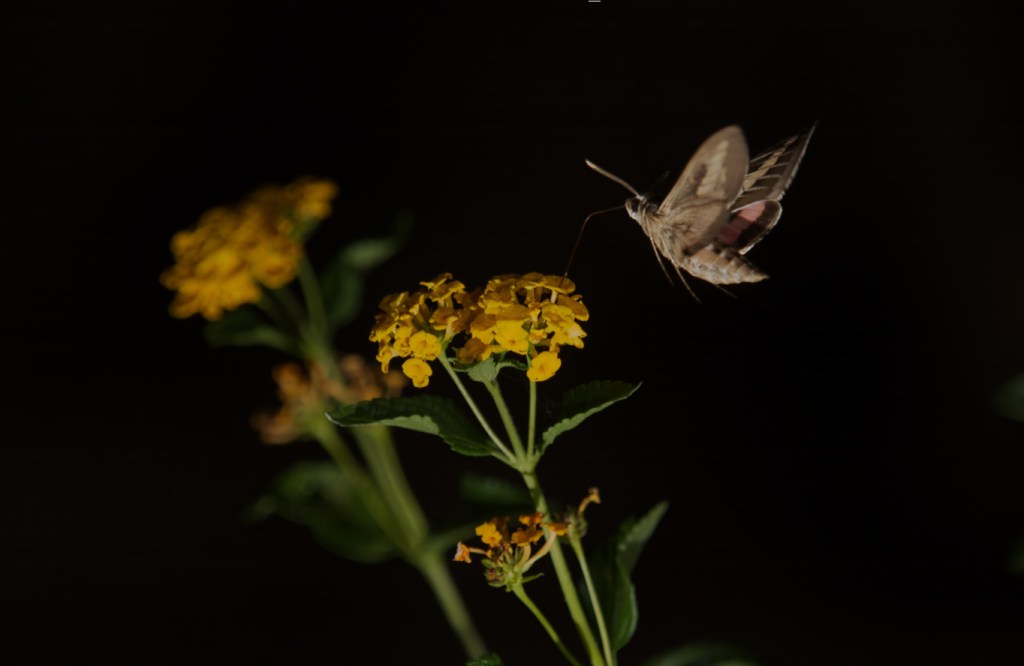
In recent days, I noticed some moths hovering around our lantana flowers in the late evening. Curiosity pique levels overwhelmed me and tunnel vision ensued. Do you ever get that? “How should I do this” was my first thought. It was after sunset, and into darkness that these creatures manifested themselves.
Light. “I need light.”
My first plan was to employ a single modelling light from my portrait making days. It was a very simple 2-bulb set up with an umbrella.
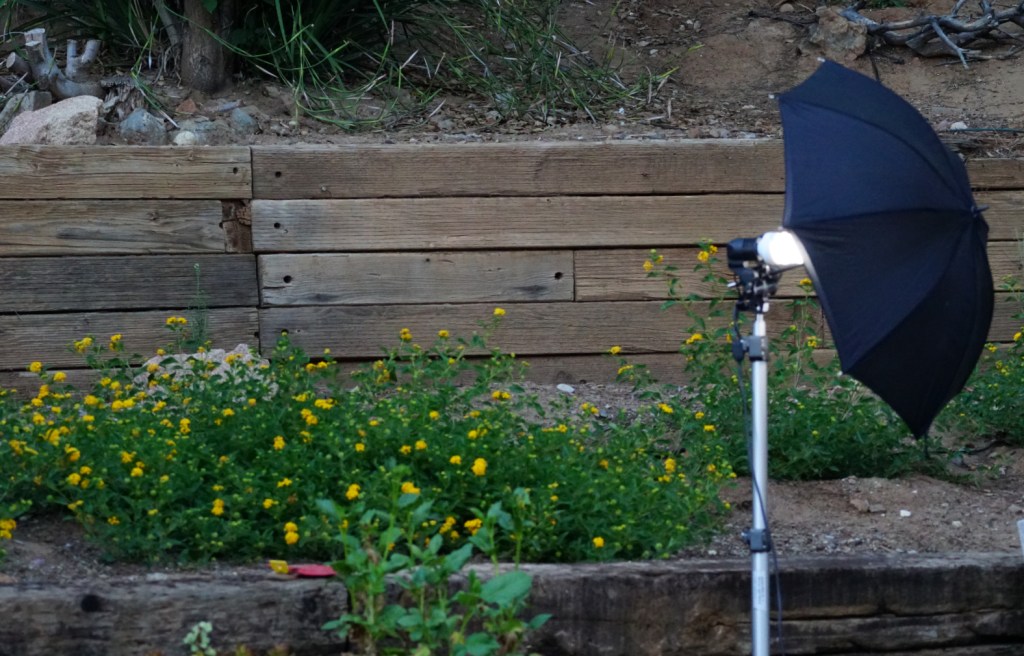
The photographic results were soft and mushy. The challenge of course is that in order to make a decent photo of rapid wings was a fast shutter. I did make some video and the results were just ok. (APSC)
The next evening I added a second 2-bulb modelling set-up plus a third drop-light. This time, the results were better, but still way too soft. The images lacked detail. So, round three.
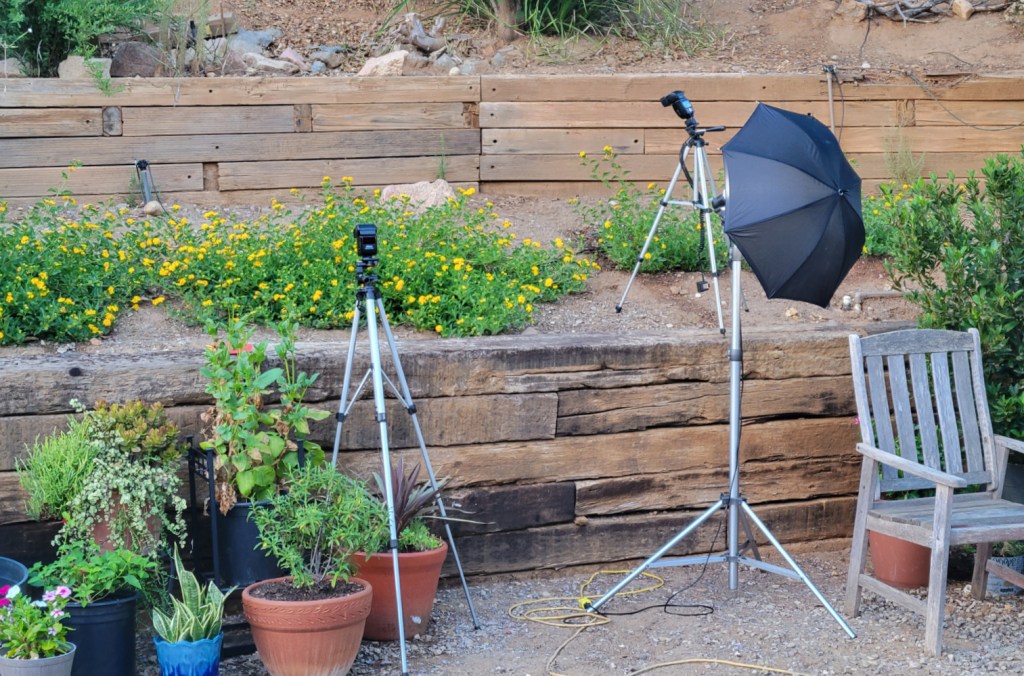
This time I broke out the old trusty speedlights. This meant I needed to go back to my technically “ancient” Nikon gear.
(1) Modelling light (for pulling focus)
(1) SU-800 IR On-Camera Trigger
(1) SB-800 IR Flash, (2) SB-600 IR Flash
(1) SC-28 Remote attached to the SB-800 – This unit allows me to override the D750’s low shutter for flash (250). The 750’s fastest 4000 shutter speed could be used. As it ended up, my settings were ISO 400 and shutter speed of 2500.
The third flash was added to the left side of the frame below. Results were much better!
To see these moths’ full color, a rear view is best.
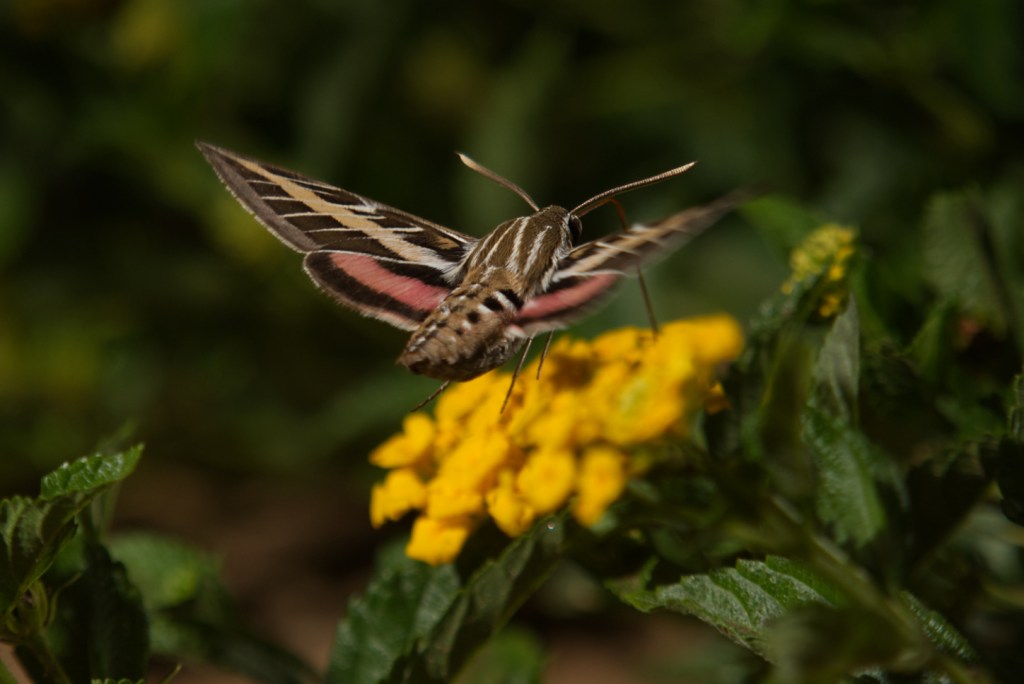
I did like that some captures rendered a near black background.
The project took a total of four nights before tunnel vision abated. There was one other benefit/surprise to this endeavor. While making video, a tarantula made an appearance in the background!

Here is what was going on with that fellow.
Infrared triggered flashes are outdated since wireless systems are far superior. Wireless units will trigger flashes around a corner of a wall. IR requires that you have a direct line-of sight with the triggering mechanism. Still it worked fine. The ancient tech still works, and works great. Thanks Nikon!


 Photographic Impressionistic Illusionistic