Harmony

The natural world
Surrounds us
Like a warm blanket

A warm, itchy, sometimes uncomfortable, too hot, suffocating, beautiful, sweet, funny, heart-warming, worrisome…
blanket

Cover photo is a candid of visiting quail on the property. About one month later than last year. The brood has about one dozen chicks. I was amazed to see them when we got here. Still am amazed. If you stay still, they go about their business.

On other notes: My lovely wife nearly stepped on this speckled rattler in the driveway. It ended up under the truck, then her car, then was “relocated” by a guy who does that.

About two months ago, we had to pony up upwards of $400 to fix the car because a rat had chewed through a sensor.

Then this happened under the hood of the truck:
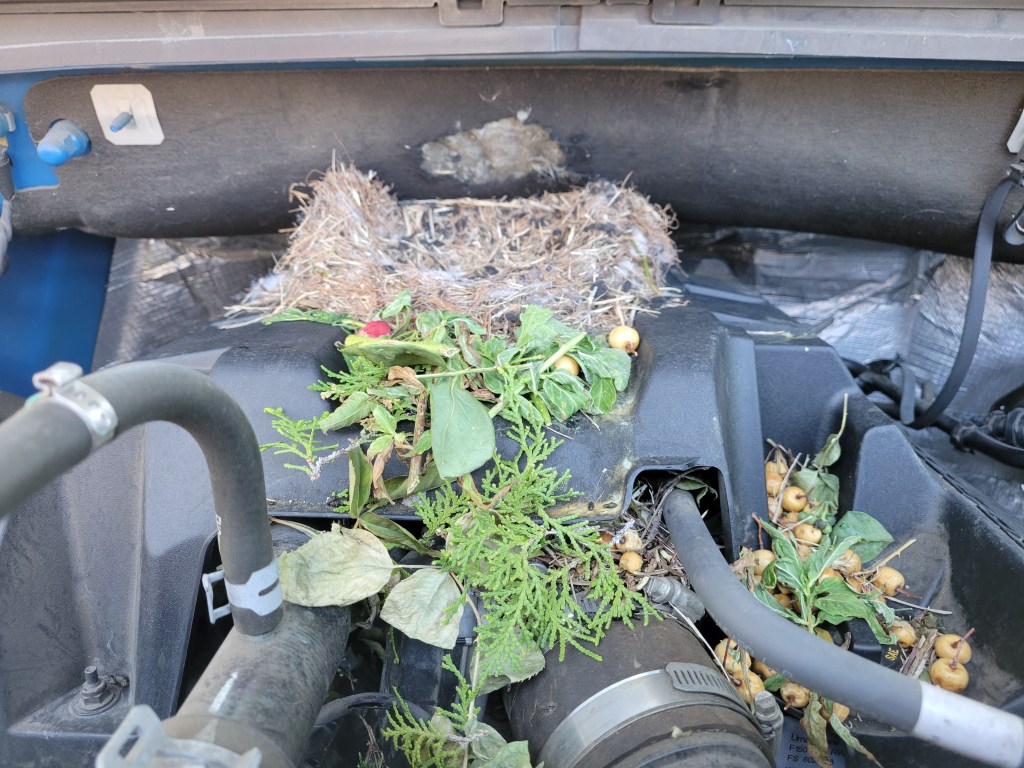
Under the manifold cover:
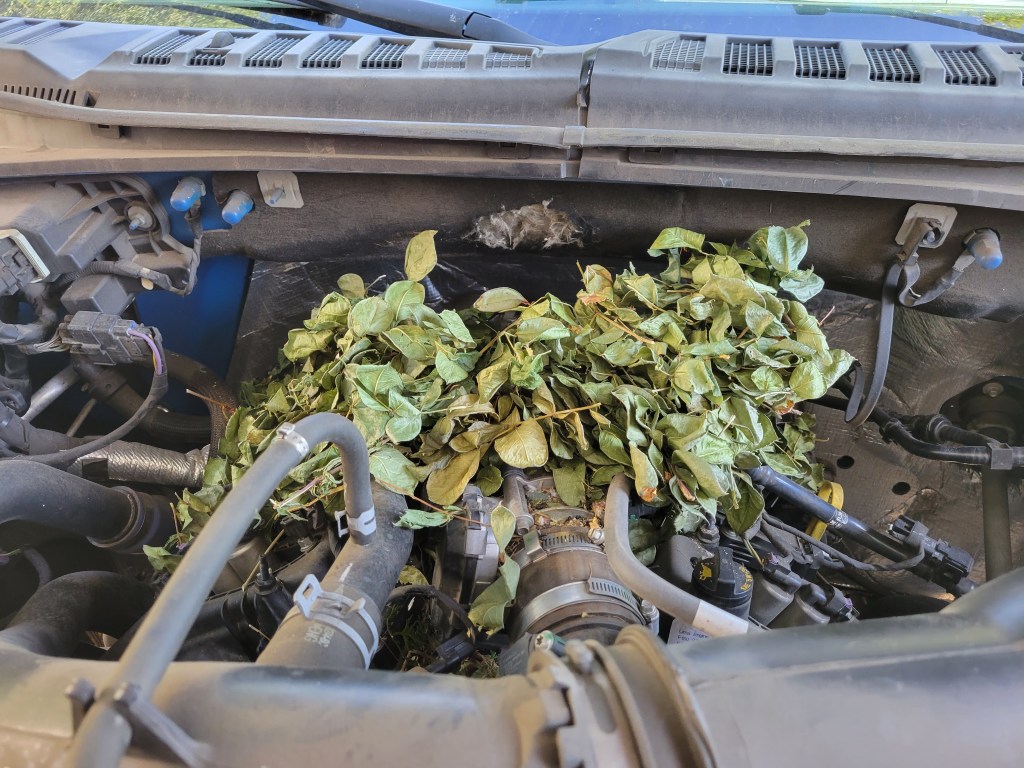
We were lucky. Damage was minimal. I had to put on my “exterminator” hat, and I hate doing that. They persisted, but I think our efforts are gaining. Our trail cam has not seen them for three nights now.

Things like this happen all the time and adjusting from an antiseptic city approach is fine. Typically, a city will have their own rodent-pest control.

Don’t get me started on squirrels. Garden raiding on steroids. We planted a new peach tree. Covered the few peaches on it with protective plastic. Gone. Limbs broken off. Wait a year for the dahlia to bloom. Chewed off.
Mouse trap paddles have helped, but it’s constant. (non-lethal)

A papa doing his job protecting his brood:

Field Notes 1

From our fields:
Due to the excellent rainfall this winter, we have experienced a boom in buckwheat growth!
A favorite of mine over the years, buckwheat typically does not proliferate until well into summer.
I noticed early blooms in April. Bees and hummingbirds love this food source!
The visuals these plants provide are excellent. Crown-like dots of white cover the chapparal like little daytime stars. These flowers turn a rustic red in the heat of summer, exhibiting a second tonal show to enjoy.
I’ve featured a few close-ups from May, shot with an old manual Nikkor 105mm 2.8/extension tube.
When we moved here last year, I told Robin that in lieu of the landscape plants, I’d prefer buckwheat. We border wild land, it just seems like a good idea and buckwheat needs no extra watering for it to bloom and do its yearly color change. Well, we did get a LARGE bloom this season on the property. Love it!

Another close-up from May

Young sprouts – no extension tube.

Upside Down Moon

Traversing down the path,
I happened to look up.
There, the moon bright and shiny
Waiting for some context.

I grabbed by trusty D750 and went to work (multiple exposure mode). It took a little longer than usual. There is no view to see what the progress looks like while you’re framing (newer cameras do that now). Everything is by memory. After many failures, this one seemed done to my liking.
Due to all the trees in the frame, I had to add the moon with the camera upside down!

Cuts, Bruises, Growth

It’s been a little over a year now that we’ve moved to a rural suburb.
The property was neglected so there is much work still left to do.

Last year’s oppressive summer was an eye opener for living on a hill that faces south. It gets hot. Hotter than other positions, but you just learn to live with it and move forward. I’m two months into retirement and we are working diligently to get the property back into shape.

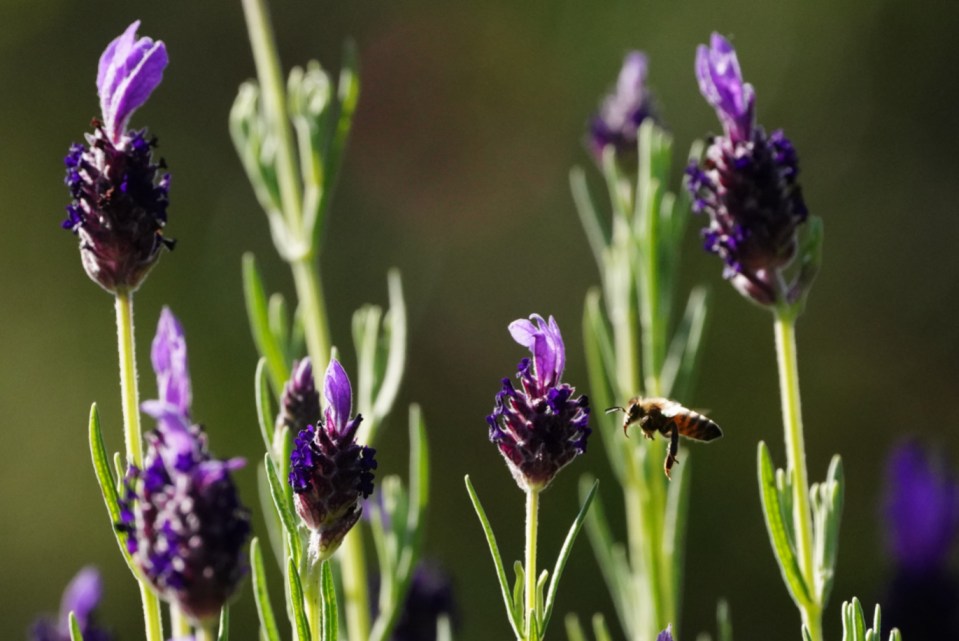
Last year into the heart of summer, it became clear that a certain Spanish lavender was on the edge. It had become a mass of dead wood with a few sprigs of leaves eeking their way out into the world. We made the decision to give it a last go at life.
With that, I cut the plant back, removing dead wood and anything that was not contributing to the overall health of the plant. Very little of the original plant was left. We were both very sad for what we had to do. The little thing was trying, but it was sending too much energy for zero return for its efforts.
We’ve fed and watered it over the last 10 months, taking care to pay special attention to it. A little nurturing can go a long way. The winter/spring afforded lots of rain and gave the plant the confidence it needed. That lavender is well over three times the mass of what was left. It’s leaves are robust and healthy and it’s flowers call the bees and hummingbirds in.
It’s funny how something seemingly dead can be brought back to life, if only it first recognizes the need to rid itself of all the superfluous things that devour its energy and yet produces nothing. We can be like that too, no?