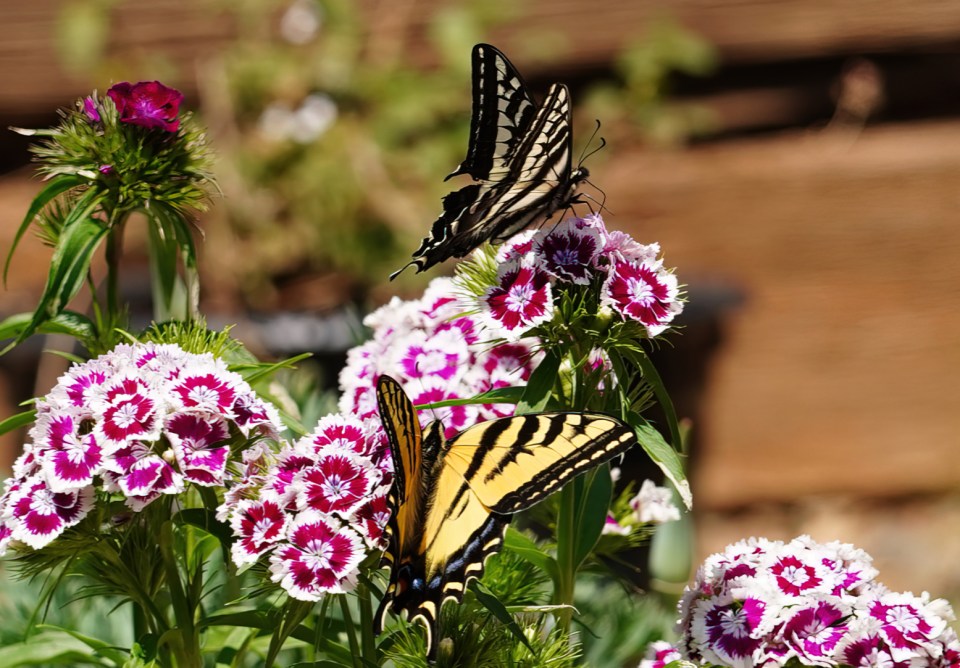
“Mark don’t pull weeds in this patch. I planted flower seeds there.” “Whoops.” Luckily, some of the seeds took root and we are treated to their magic. These came up last season and we (I) left them alone in hopes of these blooms. They looked like weeds for months. Patience is a discipline. The seeds were part of a “pollenater” pack so the types were very diverse. The cover photo: Swallowtail butterflies and dianthus.
Sometimes intentionally Life is breathed into the artistic work Other times You search for components That cry out to each other
All art is based on tension and resolution. It tells a story and demands a response from the viewer. Sometimes the story is as simple as presenting abstract elements to evoke a primal upheaval.
Cover Photo: Spring is on its way and flowers are popping like crazy. Our peach tree is in full bloom with rich pink/red tones.
Using an old Nikkor 105 without the extension tube allows “regular” photography as well as micro work.
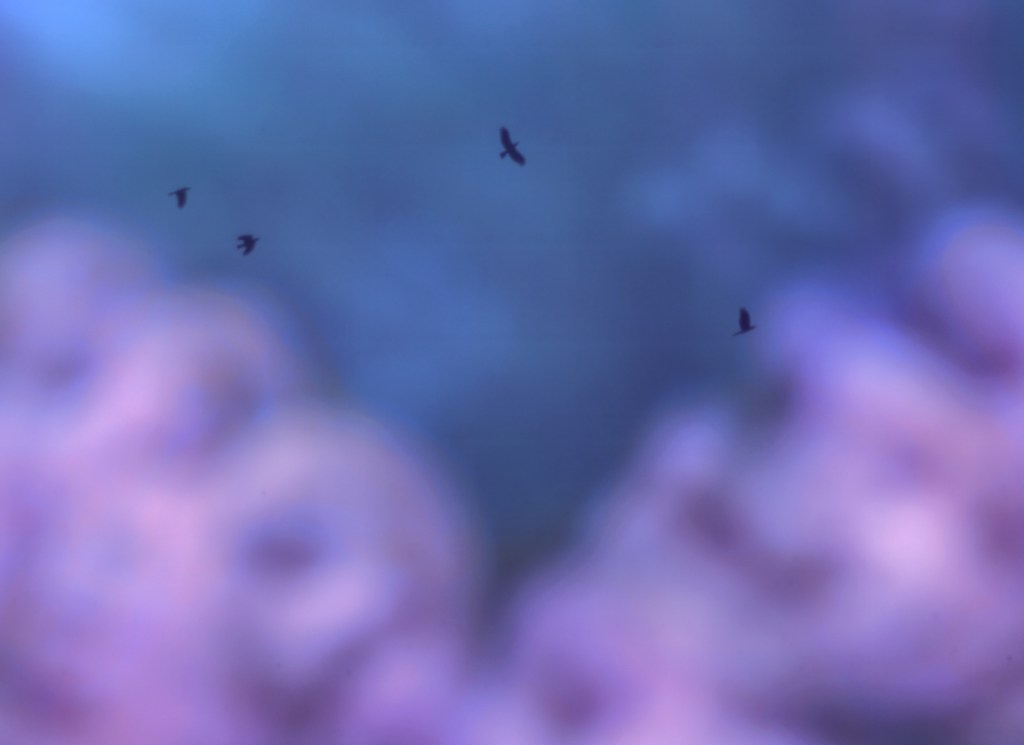
With this knowledge, the photographer can employ multiple photography techniques to capture something unexpected. No longer is the intent “take a picture of something.” Thoughts drift to imagining the possibilities. Some structures are purposefully left behind for color impact only, reimagined to something new. This is a double exposure result of that mind journey. “Cotton Candy Crows”
Winter succumbs at 78 Off the 78 Water, grass, oak, flower and fern
Spring begins March 19th and in typical southern California fashion the climate is reluctant to act like it’s still winter. Yesterday we hit 78 degrees and as we have discovered, the African daisies are already popping in color. (These are near our property).
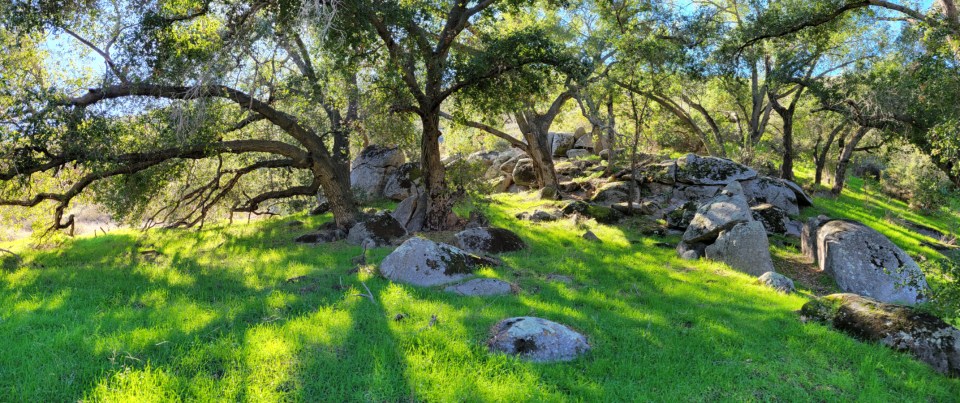
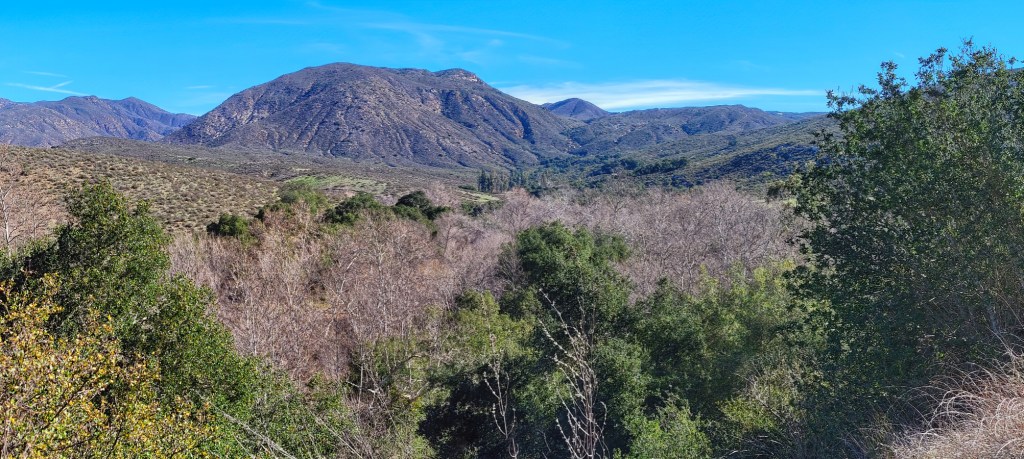
We hiked a little with our daughter near her home. There is a place called San Dieguito River Park near her house. It is just off highway 78, down a dirt road, then onto a narrow-paved road to the trailheads. The entire park is massive and we have explored only a small section. The cover photo is a phone panorama looking south through a stand of oak and rock outcropping. This section of trail is an old ranch road of decomposed granite (mostly). The terrain is fairly easy with a little up and down in the mile or so we traveled in. The ascent follows a gorge and there is currently a stream running. Currently, oaks dominate the scene, but the gorge is filled with sycamore skeletons waiting for leaves (as seen in this photo looking east).
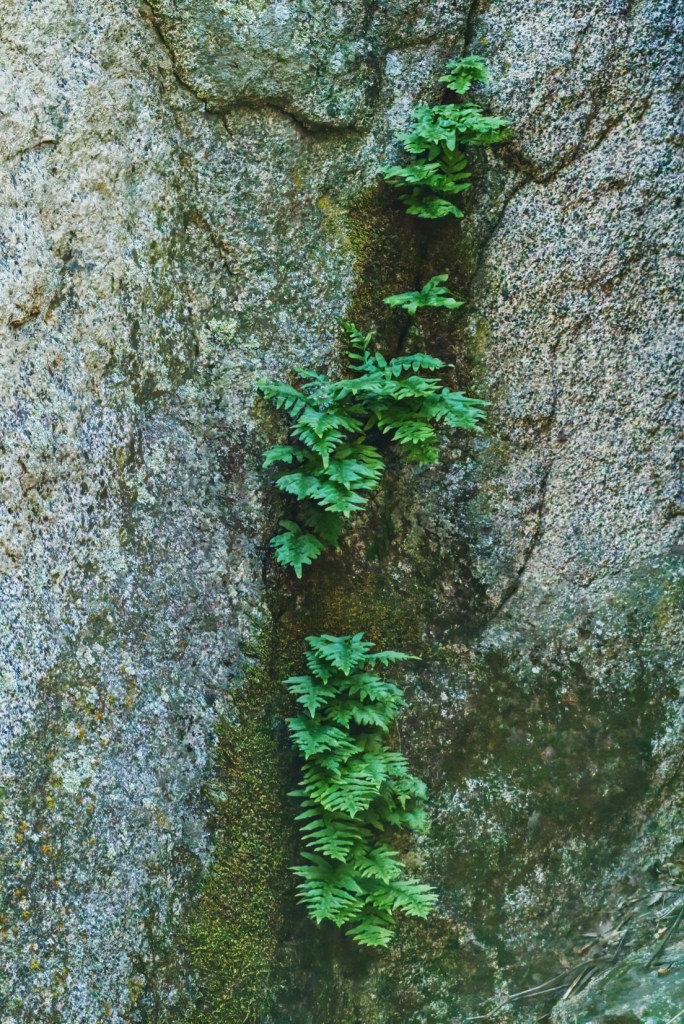
This area is definitely on my future visit list. We were there for a little over an hour which is fine for a short hike, but barely a “creative loosening up” for me. Along the way, we found an outcropping of north facing granite, with ferns growing out of them. Immediately I started channeling Alex Kunz and his mastery of isolating life overcoming adversity. Plants that pop out of the most unlikely places are not only intriguing but encouraging to the soul.
Take no part in the unfruitful works of darkness, but instead expose them. (Eph. 5:11)
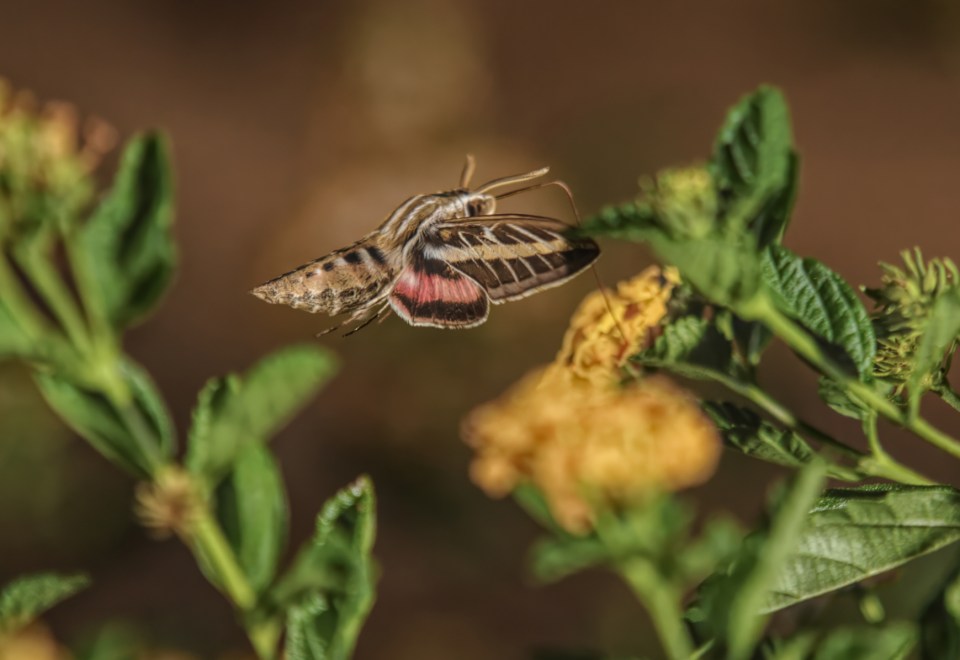
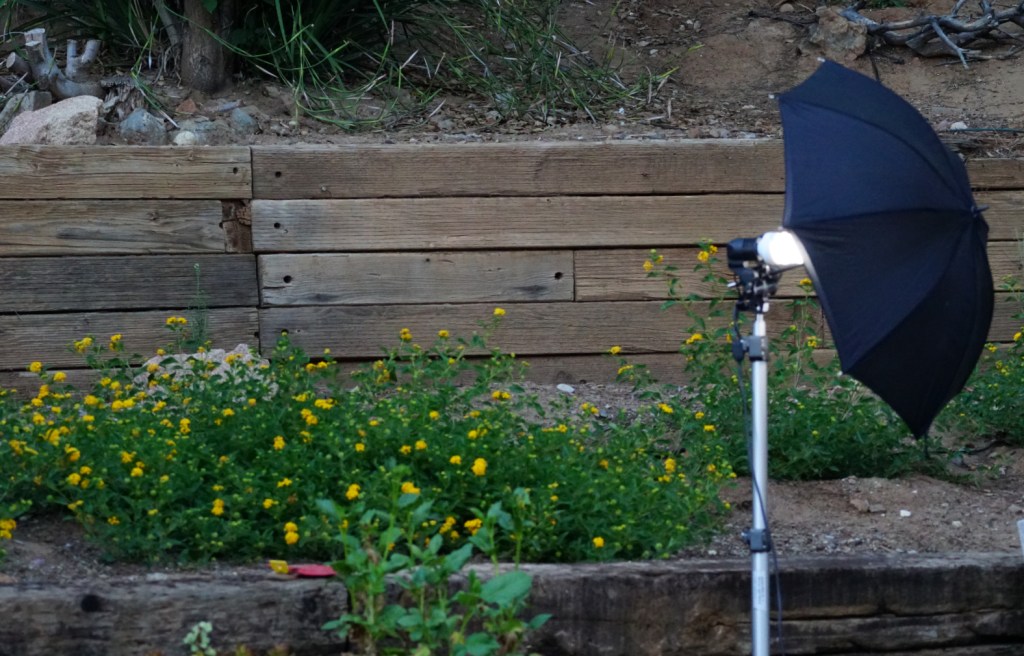
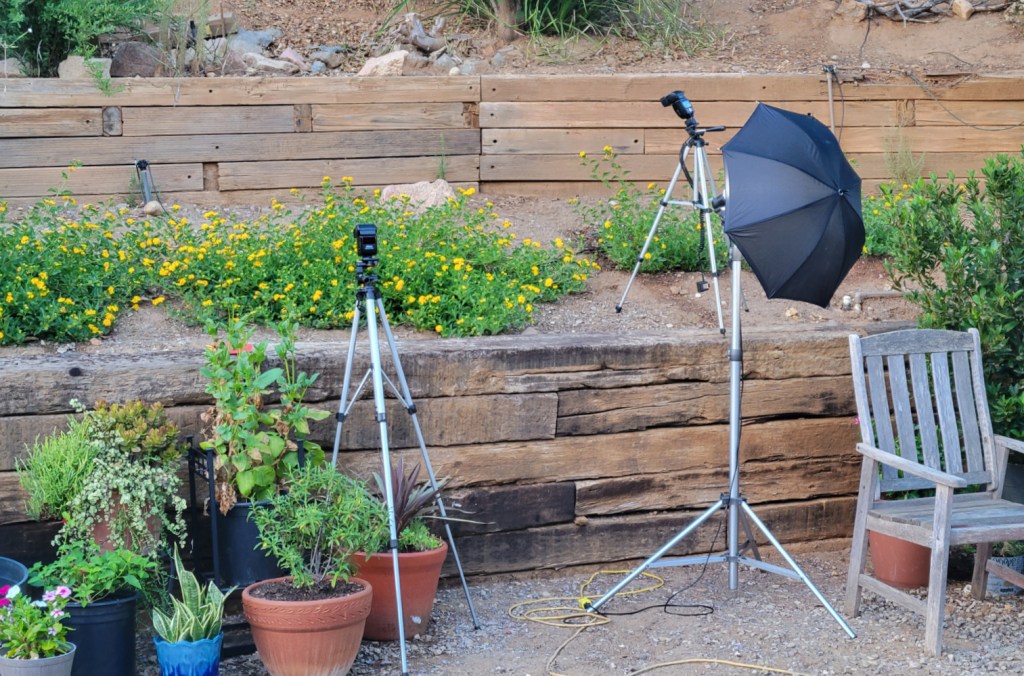
Truly, I do not take scripture lightly. In this case, the application to photography was too tack sharp. Photographers are obsessed. For whatever level, whatever reason, people who make photos are just driven by that little voice in our head that says “wow, check that out.” That little cue is the story-telling engine of being human. In recent days, I noticed some moths hovering around our lantana flowers in the late evening. Curiosity pique levels overwhelmed me and tunnel vision ensued. Do you ever get that? “How should I do this” was my first thought. It was after sunset, and into darkness that these creatures manifested themselves. Light. “I need light.” My first plan was to employ a single modelling light from my portrait making days. It was a very simple 2-bulb set up with an umbrella.
The photographic results were soft and mushy. The challenge of course is that in order to make a decent photo of rapid wings was a fast shutter. I did make some video and the results were just ok. (APSC)
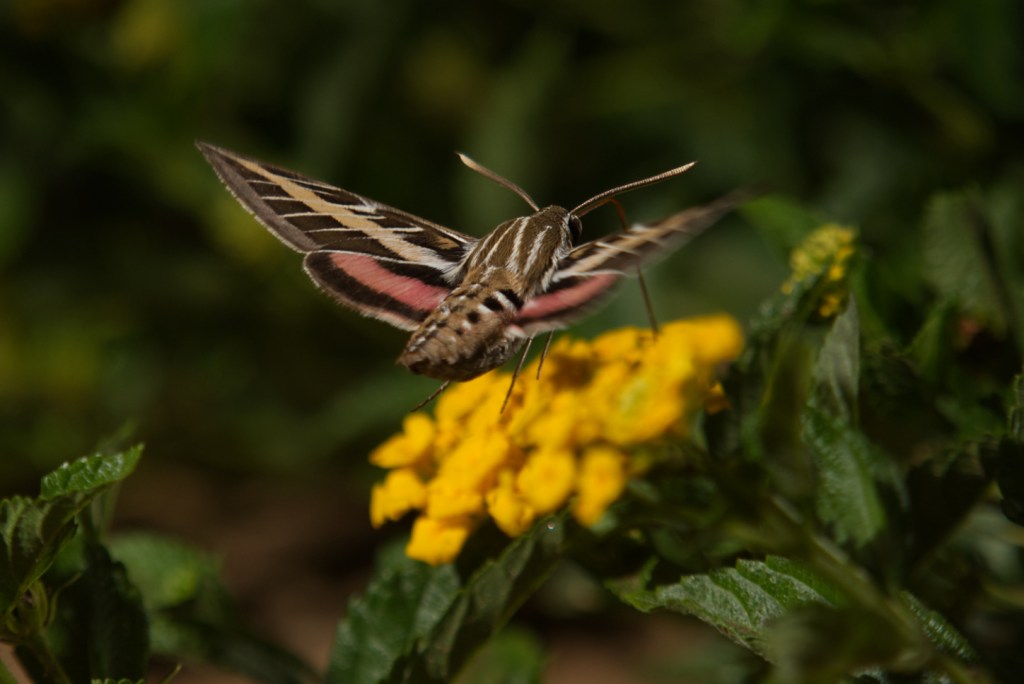
The next evening I added a second 2-bulb modelling set-up plus a third drop-light. This time, the results were better, but still way too soft. The images lacked detail. So, round three. This time I broke out the old trusty speedlights. This meant I needed to go back to my technically “ancient” Nikon gear. (1) Modelling light (for pulling focus) (1) SU-800 IR On-Camera Trigger (1) SB-800 IR Flash, (2) SB-600 IR Flash (1) SC-28 Remote attached to the SB-800 – This unit allows me to override the D750’s low shutter for flash (250). The 750’s fastest 4000 shutter speed could be used. As it ended up, my settings were ISO 400 and shutter speed of 2500. The third flash was added to the left side of the frame below. Results were much better!
To see these moths’ full color, a rear view is best.
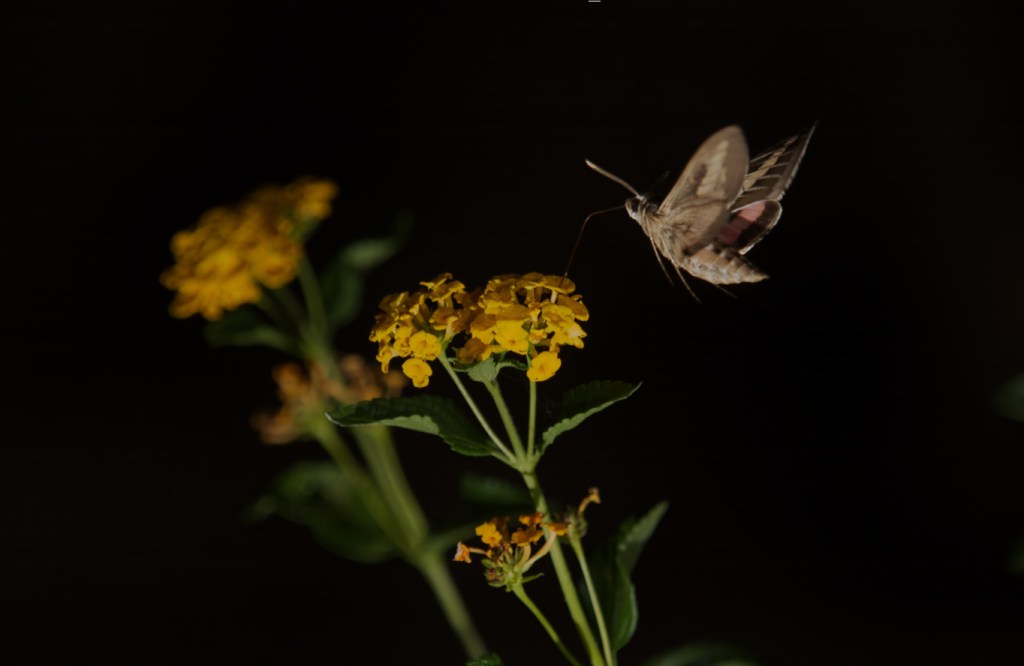
I did like that some captures rendered a near black background.
The project took a total of four nights before tunnel vision abated. There was one other benefit/surprise to this endeavor. While making video, a tarantula made an appearance in the background!
Here is what was going on with that fellow.
Infrared triggered flashes are outdated since wireless systems are far superior. Wireless units will trigger flashes around a corner of a wall. IR requires that you have a direct line-of sight with the triggering mechanism. Still it worked fine. The ancient tech still works, and works great. Thanks Nikon!





 Photographic Impressionistic Illusionistic