We’ve become very good Pointing out where things stood And how invasive things can be
The bigger picture will show The offence and its blow Points back to the speaker, that’s me
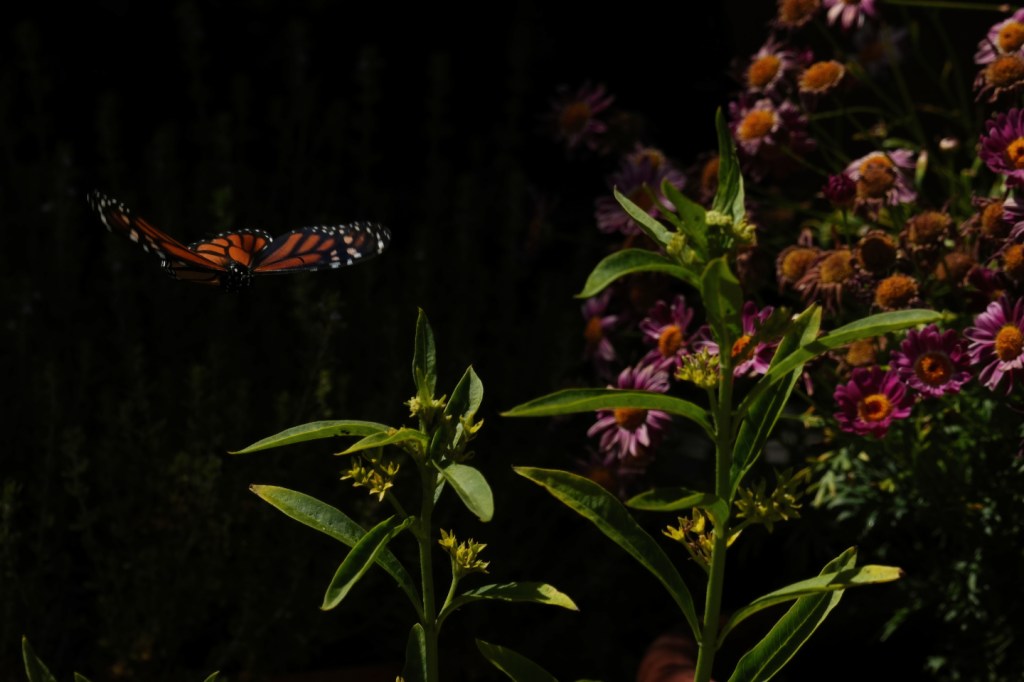
While trying to promote monarch butterflies and make video of their flight, I witnessed a hawk taking a young quail. Nature can be brutal. What happened next was troubling…then satisfying. The story:
Turkey, quail, coyote, lynx, mice, rabbit, deer, fox. They are all around here doing their life. I bring them around. Entice them so I can see them up close. Well, actually, most of them I don’t bring in. They just show up. I had high hopes with mourning cloak caterpillars. Maybe I could document some of their life cycle. Then they scattered one night. Not to be seen again. Now it’s the monarch butterfly who’s piqued my interest. We were gifted a milkweed at Christmas and managed not to kill it since then. I was in the middle of completely ignoring it when one afternoon I caught sight of a monarch circling the plant. Grabbed the FX30 and shot some footage and jpgs. The specimen graced the plant with some eggs and now we’re expecting. Something new to read up on or “youtube” to get to the bottom of rearing the hopeful new grandkids…grandflies? Anyway, as usual, I really don’t know anything. You start digging and pretty soon it’s all about propagating more milkweed. “You likely don’t have enough or “Watch out for this, be careful of that.” It’s a rabbit hole alright. We’ll see what happens next.
The FX30 is not a photo-centric camera, but it does ok. (No viewfinder…oy)
Still, with a little practice:
What I do like about the camera is 240FPS with 4:2:2 color. Float like a butterfly.
On the ninth I had placed a trail cam face up on a table and accidentally left it overnight. The next day I reviewed the footage and saw lots of moths and a few bats. In two of the clips there were some weird lights that came into view. At first I thought it was a drone. That creeped me out. Then yesterday I told my daughter and her husband about it. He explained that it was a Starlink Train. Apparently, multiple satellites will launch and travel in a line in a low orbit until they deploy to their respective final orbits. So, not weird, new normal.
From the provided data, a key Starlink launch occurred on May 9, 2025, at 20:19 PDT (00:19 GMT on May 10) from Vandenberg Space Force Base, California, deploying 26 satellites (Starlink mission 257). Vandenberg is approximately 200 miles northwest of Ramona, and satellites launched from this site often follow a southbound trajectory, making them potentially visible over Southern California shortly after launch. Another launch occurred on May 10, 2025, at 02:28 PDT (06:28 GMT) from Cape Canaveral, Florida, but this is less relevant due to the distance and orbital path. (The trial cam date shown is incorrect)
What story will you tell When upon the hills of green and brown Your fire delights Til April’s rain Does quench your flame And to seed you travel Gone too soon in my mind
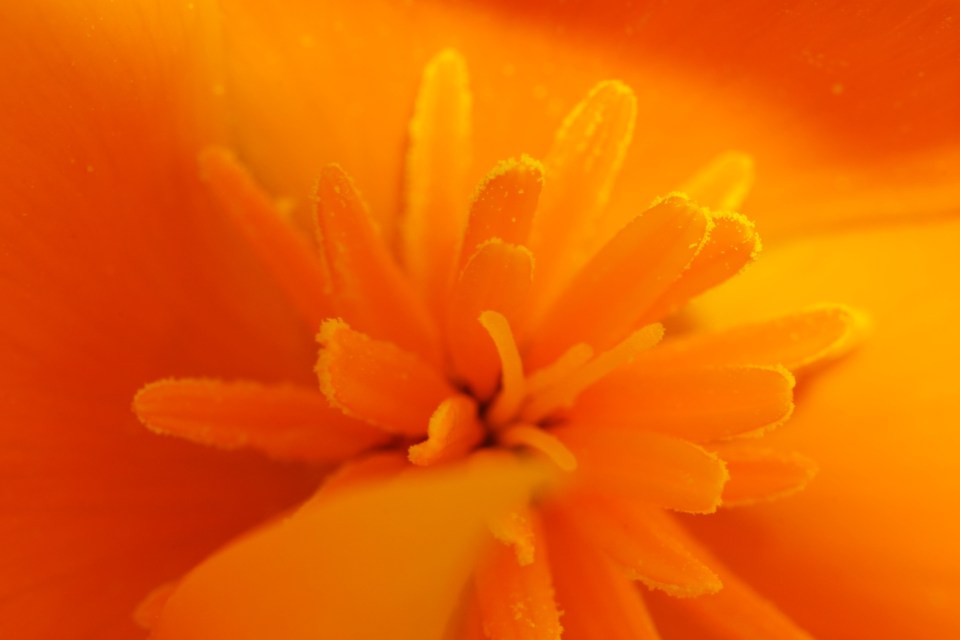
Love these poppies. They are very delicate. Even a light April rain can knock off petals.
Take no part in the unfruitful works of darkness, but instead expose them. (Eph. 5:11)
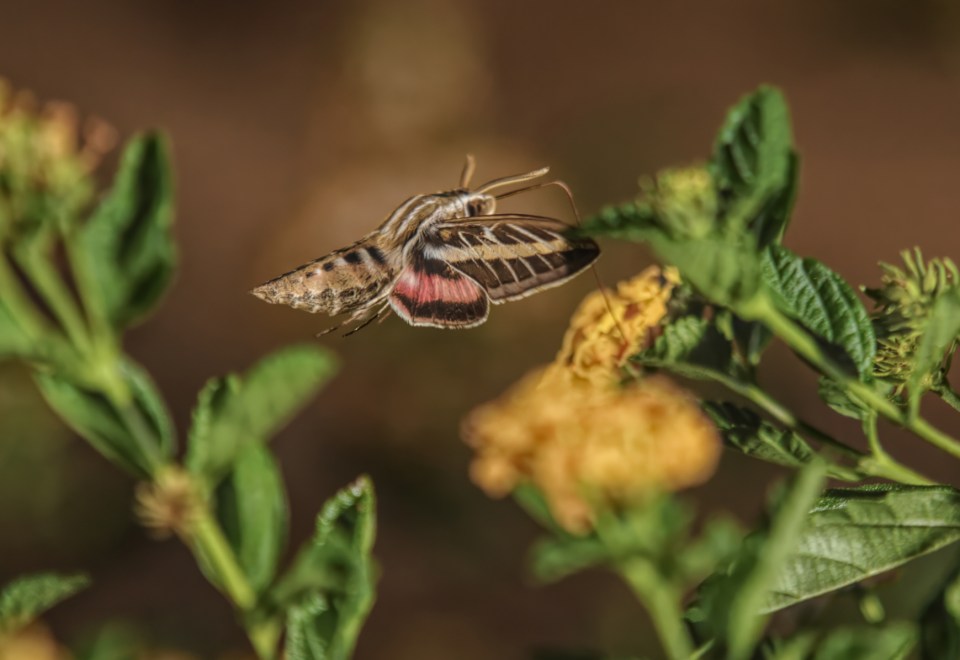
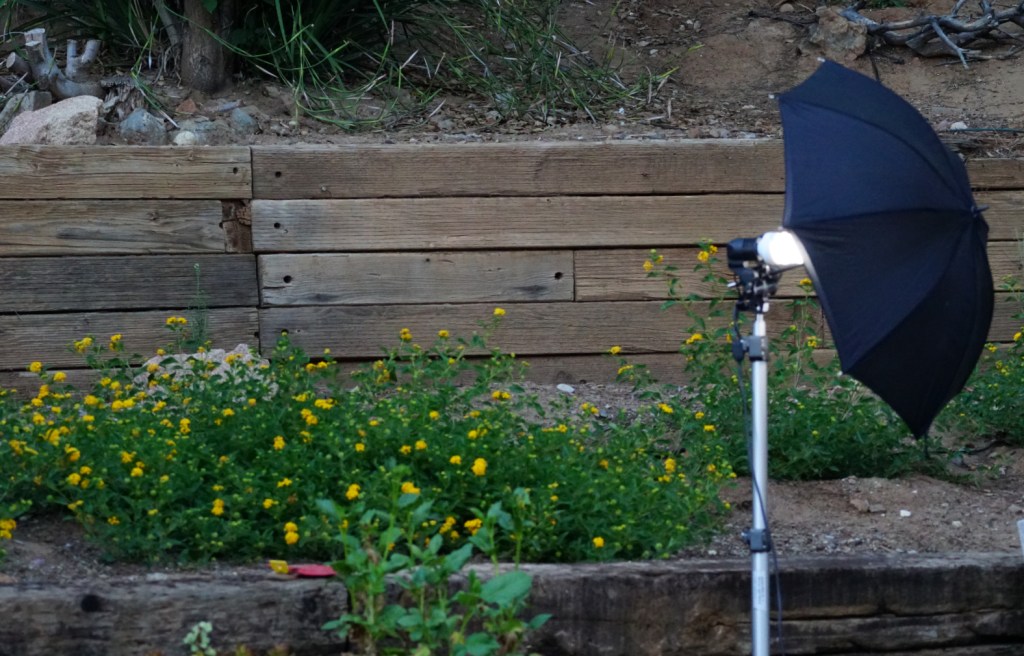
Truly, I do not take scripture lightly. In this case, the application to photography was too tack sharp. Photographers are obsessed. For whatever level, whatever reason, people who make photos are just driven by that little voice in our head that says “wow, check that out.” That little cue is the story-telling engine of being human. In recent days, I noticed some moths hovering around our lantana flowers in the late evening. Curiosity pique levels overwhelmed me and tunnel vision ensued. Do you ever get that? “How should I do this” was my first thought. It was after sunset, and into darkness that these creatures manifested themselves. Light. “I need light.” My first plan was to employ a single modelling light from my portrait making days. It was a very simple 2-bulb set up with an umbrella.
The photographic results were soft and mushy. The challenge of course is that in order to make a decent photo of rapid wings was a fast shutter. I did make some video and the results were just ok. (APSC)
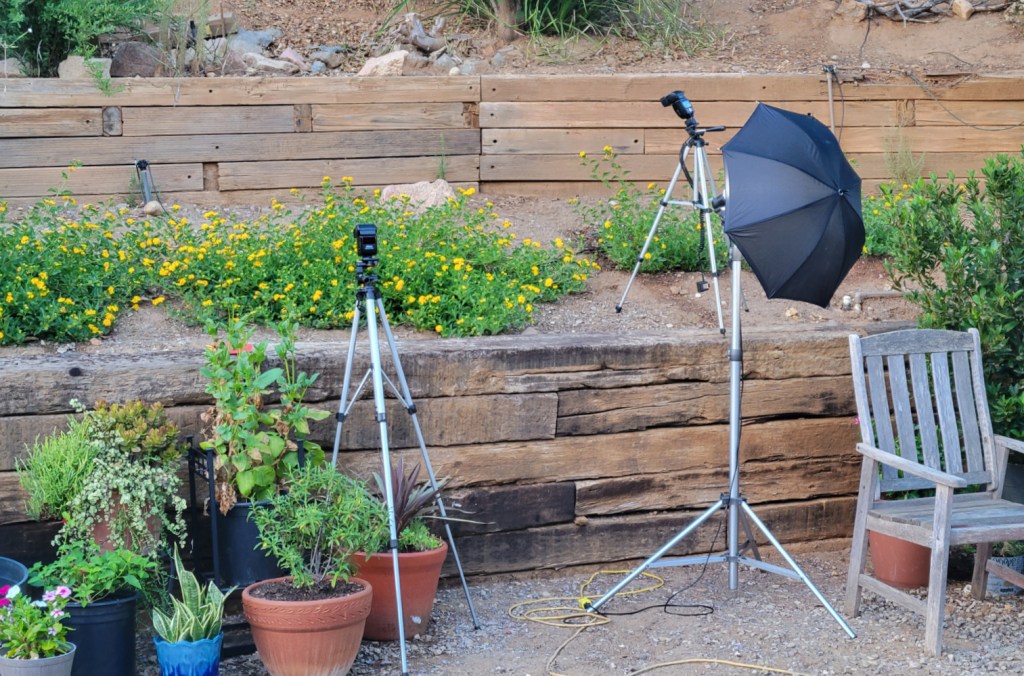
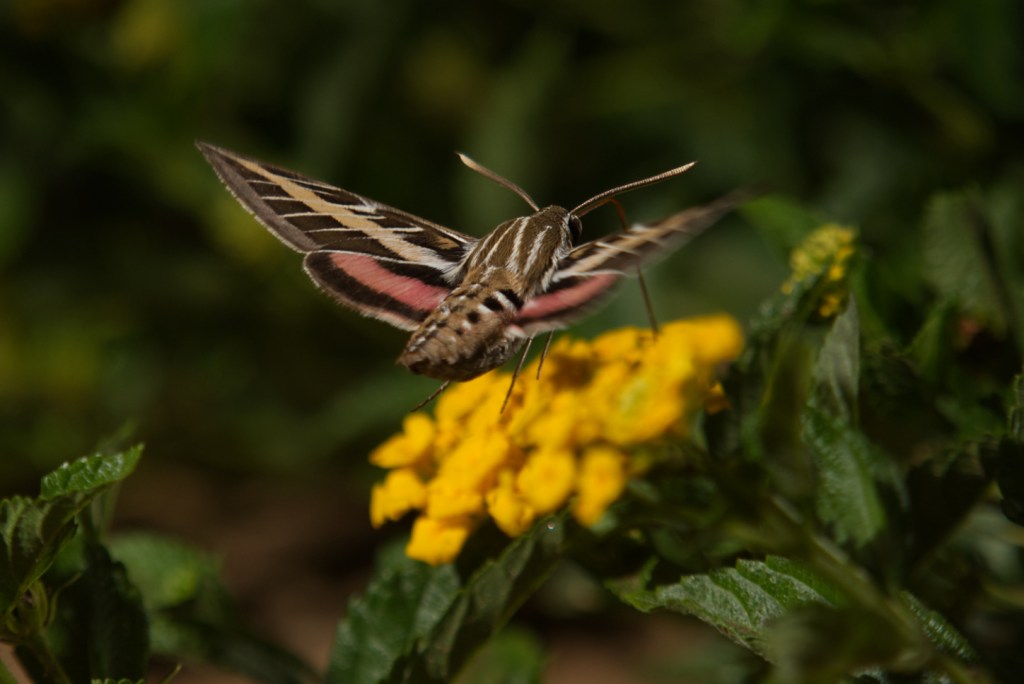
The next evening I added a second 2-bulb modelling set-up plus a third drop-light. This time, the results were better, but still way too soft. The images lacked detail. So, round three. This time I broke out the old trusty speedlights. This meant I needed to go back to my technically “ancient” Nikon gear. (1) Modelling light (for pulling focus) (1) SU-800 IR On-Camera Trigger (1) SB-800 IR Flash, (2) SB-600 IR Flash (1) SC-28 Remote attached to the SB-800 – This unit allows me to override the D750’s low shutter for flash (250). The 750’s fastest 4000 shutter speed could be used. As it ended up, my settings were ISO 400 and shutter speed of 2500. The third flash was added to the left side of the frame below. Results were much better!
To see these moths’ full color, a rear view is best.
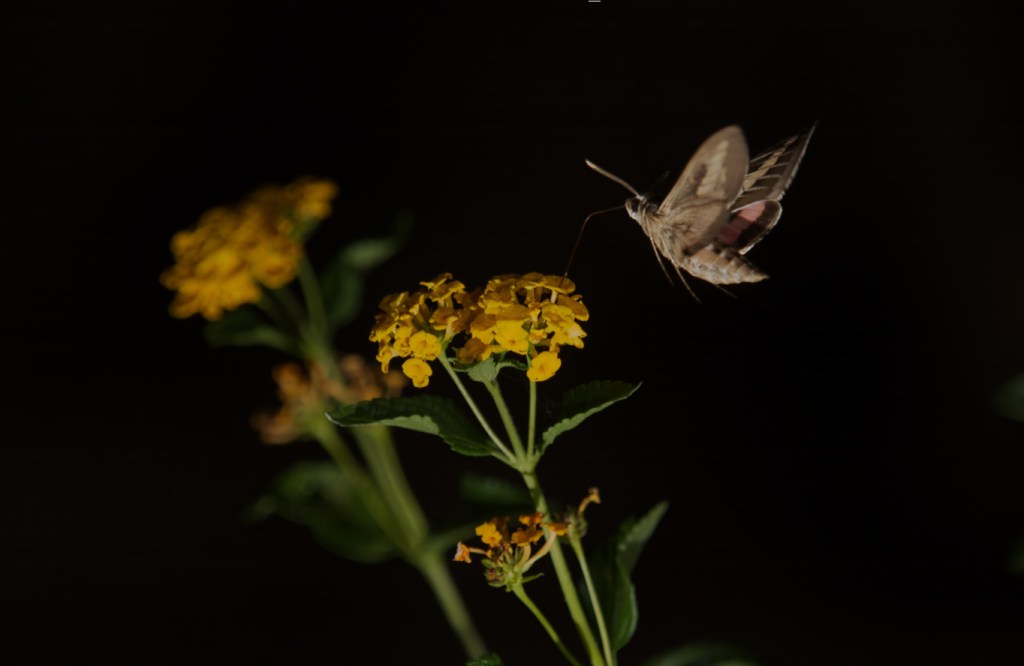
I did like that some captures rendered a near black background.
The project took a total of four nights before tunnel vision abated. There was one other benefit/surprise to this endeavor. While making video, a tarantula made an appearance in the background!
Here is what was going on with that fellow.
Infrared triggered flashes are outdated since wireless systems are far superior. Wireless units will trigger flashes around a corner of a wall. IR requires that you have a direct line-of sight with the triggering mechanism. Still it worked fine. The ancient tech still works, and works great. Thanks Nikon!




 Photographic Impressionistic Illusionistic