Nature’s plan
Void
Of emotion
Another of my “hopes dashed” sagas.
A moment of peripheral movement piqued my interest. A bird exiting from under the eaves of the house could mean a new nest. Walking to the eave, a house finch protested. He was atop a gate, feet apart in a defensive stance. Our eyes met and I walked away.
Within a week, there was a full nest.
Again, I started planning to document the life cycle in video and photos. I dug up an old action cam that I can operate with a phone app. But how do I mount it? Looking through my hardware, there were some steel straps that could be modified perfectly. Everything was ready down to the 1/4-20 anchor. I was pretty sure the eggs were in the nest. The plan was to install the camera in a couple of days.
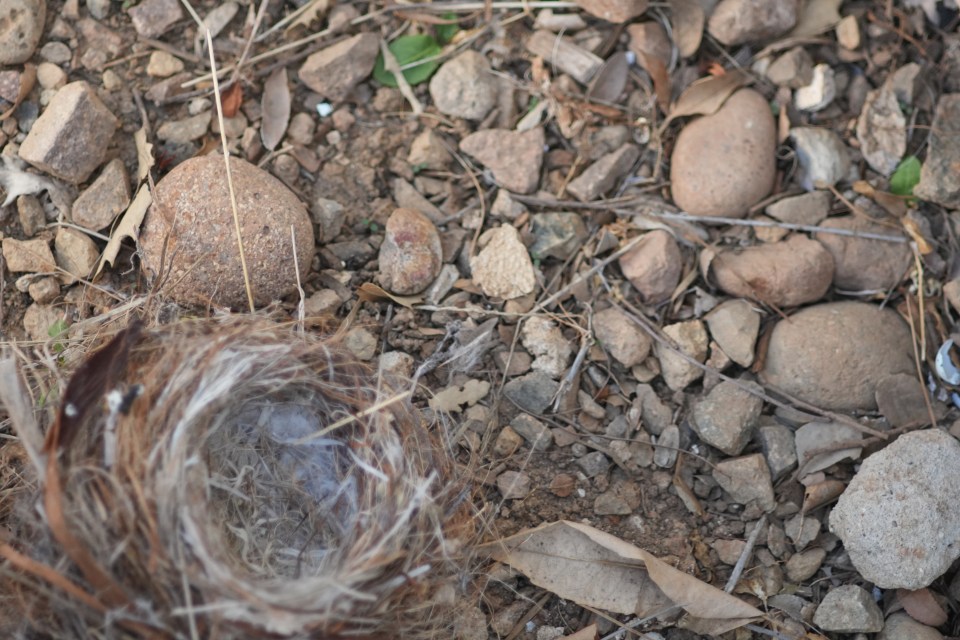
The next day, the nest was on the ground and the eggs eaten (partial shell in the photo).
Seems one of our scrub jays took the opportunity to nourish himself with a high protein snack. He had been hanging around the eaves on another side of the house hunting a grasshopper (which I appreciated).
Maybe next time.



 Photographic Impressionistic Illusionistic